









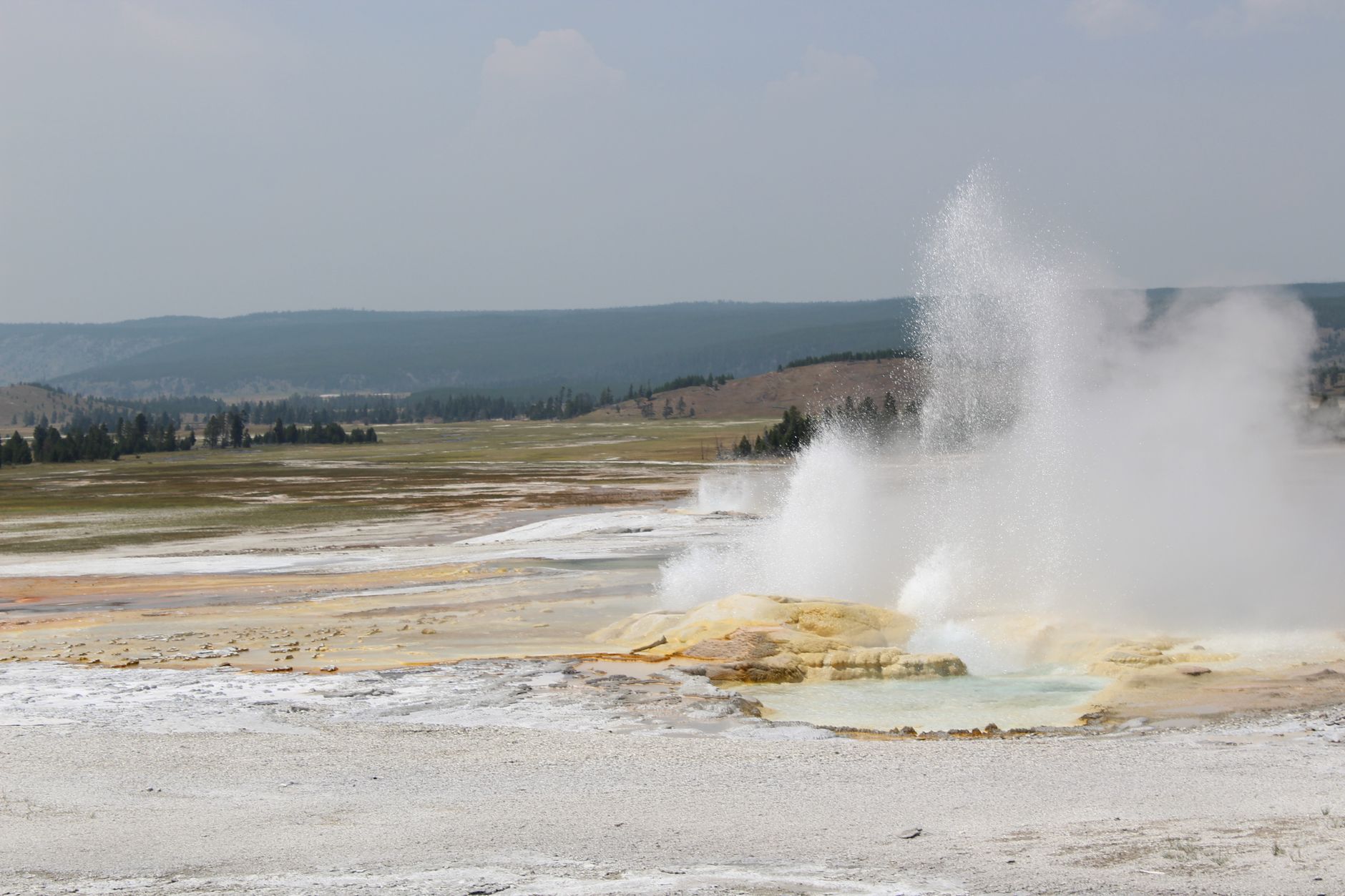
The Yellowstone supervolcano eruption could have devastating consequences for the planet. Understanding the potential impacts of such an event is crucial for preparedness and awareness.
What is the Yellowstone supervolcano?
The Yellowstone supervolcano is one of the largest active volcanic systems in the world, located primarily in the U.S. state of Wyoming. It is situated in Yellowstone National Park and has a massive caldera that formed during a series of explosive eruptions over the past two million years. The most recent of these eruptions occurred approximately 640,000 years ago, resulting in the formation of a large crater that is now a major geological feature.
The supervolcano sits atop a hotspot, where magma from the Earth’s mantle rises to the surface. This unique geological activity has resulted in various geothermal features, including hot springs, geysers, and fumaroles, making Yellowstone a hotspot for both tourism and scientific research.
Scientists continuously monitor the Yellowstone supervolcano for signs of potential eruptions. While a significant eruption could have catastrophic effects on the environment and human life, the likelihood of such an event occurring in the near future remains low. However, understanding the supervolcano’s behavior is crucial for assessing risks associated with a potential Yellowstone supervolcano eruption.
Potential impacts of an eruption
The potential impacts of a Yellowstone supervolcano eruption could be catastrophic, affecting not only the local environment but also the global climate. If the supervolcano were to erupt, scientists predict several dire consequences:
- Ashfall: A significant eruption could blanket large areas with volcanic ash, devastating agriculture and contaminating water supplies.
- Climate Change: The release of ash and gases into the atmosphere could lead to a phenomenon known as “volcanic winter,” resulting in drastic temperature drops worldwide.
- Human Health: Inhalation of volcanic ash could cause severe respiratory issues for millions, particularly in densely populated regions.
- Economic Disruption: Major cities and agricultural centers could be heavily impacted, leading to supply chain disruptions and economic instability.
While scientists work to understand the Yellowstone supervolcano better, the fear of such an eruption remains a pressing concern for disaster preparedness and environmental policy.
Historical eruptions of Yellowstone
The Yellowstone supervolcano has a long and complex history of eruptions that have shaped the landscape of the region. Its most notable eruptions occurred approximately 2.1 million, 1.3 million, and 640,000 years ago, each time significantly altering the environment and impacting life both locally and globally.
During these catastrophic events, vast amounts of volcanic material were expelled, leading to the formation of large calderas. The most recent eruption, which took place around 640,000 years ago, released an estimated 1,000 cubic kilometers of ash and debris into the atmosphere. This event contributed to widespread climate changes and affected ecosystems far beyond the immediate vicinity of Yellowstone.
Experts closely monitor the supervolcano for signs of potential eruptions, as understanding its historical patterns is crucial for predicting future activity. Should a Yellowstone supervolcano eruption occur again, the consequences could be dire, not just for the surrounding areas but potentially for the entire planet, leading to a scenario that some describe as the worst case.
How would society respond?
In the event of a Yellowstone supervolcano eruption, society’s response would be swift yet chaotic. Emergency services would mobilize to evacuate residents in the immediate vicinity, with priority given to those in the highest risk areas. This would likely involve large-scale evacuations, roadblocks, and potential airlift operations.
Government agencies, both local and federal, would coordinate efforts to provide shelter and resources for displaced individuals. However, logistical challenges would arise due to damaged infrastructure and limited access to affected regions.
The broader impact on society would manifest through:
- Food supply disruptions: Ash fallout could severely affect agriculture, leading to shortages.
- Public health crises: Respiratory issues could surge as ash spreads across large areas.
- Economic turmoil: The tourism industry and local economies would suffer immensely, creating long-term financial challenges.
As panic spreads, misinformation could reign, further complicating the response to a Yellowstone supervolcano eruption. Effective communication and public trust would be crucial in managing the crisis.
Scientific predictions for the future
Scientists have been closely monitoring the Yellowstone supervolcano eruption potential, utilizing advanced technology to make predictions about its future activity. Current models suggest that while an eruption is not imminent, the possibility cannot be entirely dismissed.
Key factors that scientists consider in their predictions include:
- Seismic activity: An increase in earthquakes could indicate rising magma beneath the surface, signaling potential eruptions.
- Ground deformation: Changes in the land’s surface can suggest the movement of magma, which may precede an eruption.
- Gas emissions: Elevated levels of volcanic gases such as carbon dioxide and sulfur dioxide are monitored to assess changes in volcanic activity.
Despite these monitoring efforts, experts emphasize that predicting the exact timing and scale of a Yellowstone supervolcano eruption remains challenging. Continuous research is crucial for understanding the supervolcano’s behavior and mitigating potential risks associated with a catastrophic event.
Is there a way to prevent it?
As concerns grow about the Yellowstone supervolcano eruption, many wonder if there are any measures that can be taken to prevent such a catastrophic event. However, scientists agree that currently, there is no feasible way to stop a supervolcano from erupting.
While monitoring systems have been established to track seismic activity and ground deformation in the Yellowstone area, these methods primarily serve as early warning systems rather than preventive measures. The following points highlight the challenges in preventing an eruption:
- Natural process: Eruptions are a natural geological phenomenon driven by magma movement beneath the Earth’s surface.
- Lack of control: Human intervention cannot influence the vast geological processes that occur within a supervolcano.
- Preparedness over prevention: Efforts focus on emergency preparedness and public education rather than attempting to mitigate the eruption itself.
In summary, while understanding the Yellowstone supervolcano eruption is crucial, the focus remains on preparedness rather than prevention.
Photo by Marije Kouyzer on Pexels
Where this came from
You might also like
North Korea missile tests: Clear implications for global security · UK military support Saudi Arabia: A Clear Commitment · Bungie Destiny news: Is it the best time to return?